Business
5 simple tricks for choosing an eye-catching wooden cutting board with handle
Quality cutting boards are usually quite heavy because that’s how they stay firm and stable on the tabletop when you’re slicing or slicing large foods like meat or even bones. Many of these cutting boards usually have handles that make them easy to pick up, move, or even flip when you want to use their reverse side. The handle also allows you to hang the cutting board to dry the cooking surface, ensure hygiene and help the board dry around.
However, it is difficult to choose wooden cutting boards with handle products according to your wishes and needs. The following article from UTIOR Vietnam about 5 simple tricks for choosing an eye-catching wooden cutting board with handle will help you choose a suitable cutting board
1. Based on the size
The right size cutting board makes cutting much easier and safer. You should choose wooden cutting boards with handle that have enough space for your ingredients and allows you to work easily while cutting. On the other hand, the bigger the board, the more counter space you need, and the more it will cost to purchase. You must consider these factors to get the most practical cutting board for your situation.
A small board is enough to cut strawberries, lemons or other small items, which you can do with a small paring knife. When you need to cut meat or vegetables you will definitely need a larger cutting board
2. Based on the sanitary properties of the wooden cutting board with handle

The kitchen is home to a lot of bacteria, but unfortunately, they come from the very tools we use to prepare food like knives or cutting boards. So choosing a wooden cutting board with handle with antibacterial properties is also an important point
Certain species of wood like teak, acacia have inherent antibacterial properties that help kill bacteria or stop their growth. You can also try bamboo cutting boards that also have antibacterial properties.
But it’s best to use separate cutting boards for different ingredients to prevent cross-contamination between ingredients, at the very least, to have a separate cutting board for raw meat and cooked foods.
3. Check for strength and durability
Wooden cutting boards with handle from hardwoods such as maple, walnut, and cherry have a high density of wood, making them harder and more durable than softwoods. This protects the cutting board from sharp knives that create an uneven cutting surface. Avoid soft woods, such as cedar and pine, which are easily damaged by knives
4. The surface is knife-friendly
Although we have a solid board, it should not be so hard that it blunts the knives or causes them to kink.
Therefore, choose a cutting board with moderate hardness, it is recommended to use surfaces with tight grains because they are smooth and less abrasive to the edges of the knife.
5. Aesthetics

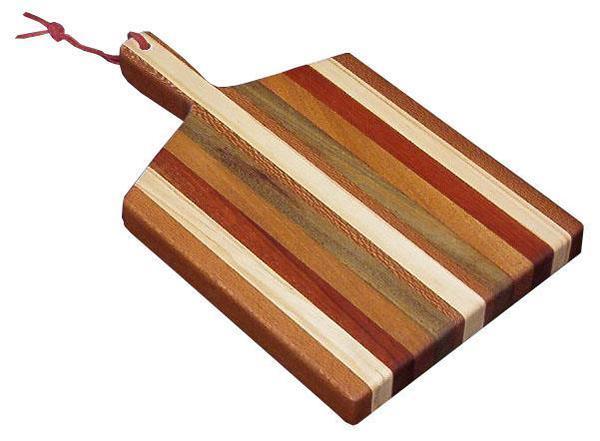
The wooden cutting boards with handle should be eye-catching as they will often appear in your kitchen space, in food preparation, and usually as part of food presentation if you use them as a cheese board or a serving salad board. The ideal aesthetic properties for a cutting board depend on personal preference.
Lighter-colored cutting boards look better if engraved, but will not effectively hide stains. Black cutting boards may look dull but maintain color longer.
Final thought
To choose a cutting board with a handle, you need to analyze each feature with your own kitchen needs. Hope the article has provided the necessary information to help you make the right decision.
If you don’t know where to buy high-quality wooden cutting boards with handle, UTIOR Vietnam will be your optimal choice. We provide different styles of cutting boards from the quality and diverse woods, easy for your choice.